Article: Baby Alpaca vs Merino Wool: What's the Difference?
Baby Alpaca vs Merino Wool: What's the Difference?
If you've ever stood in a yarn shop holding a skein of baby alpaca in one hand and merino wool in the other, you already know the problem: both feel incredible, both are natural, and both come with a premium price tag. The question isn't which one is better — it's which one is right for your project, your skin, and your budget.
This guide breaks down the real differences between baby alpaca and merino wool — starting with fiber diameter, which is the most important factor most people never think to ask about.
What Is Baby Alpaca Fiber?
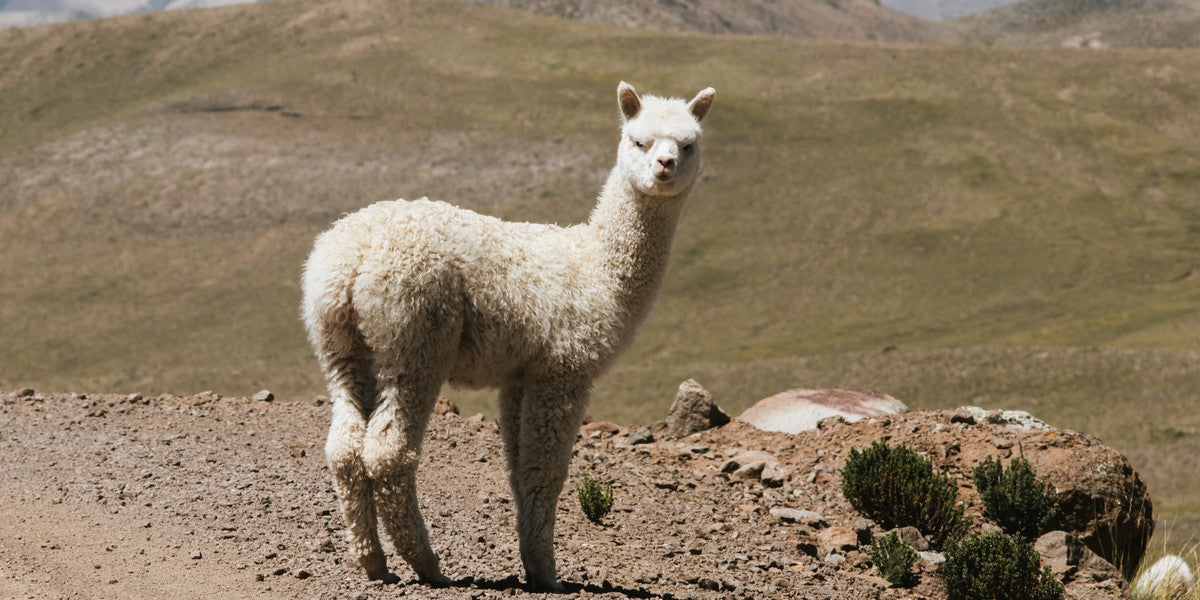
Baby alpaca is a grade of fiber fineness, not fiber from young animals. The term refers to fleece that measures approximately 22.5 microns or finer in average fiber diameter — a grading system used by the Alpaca Owners Association (AOA) in the US and by Peruvian textile mills, which produce the majority of the world's alpaca fiber.
Adult alpacas regularly produce baby-grade fleece. The confusion with age comes from the fact that a young alpaca's first shearing is often very fine, but the term "baby alpaca" describes a measurement, not an animal.
Alpaca fiber has a distinctive internal structure: many fibers contain a partial medulla, a central core that can trap air. This contributes to alpaca's warmth-for-weight ratio — it insulates well without adding bulk. Alpaca also contains no lanolin, the natural grease found in sheep's wool, which matters for people with lanolin sensitivity.
Alpalove baby alpaca yarn is sourced directly from Peru and meets the 22.5-micron grade threshold across all product lines.
What Is Merino Wool?
Merino wool comes from Merino sheep and is the finest grade of sheep's wool commercially available. Superfine merino measures between 15 and 19 microns; fine merino ranges from approximately 19 to 22 microns. This means the finest merino can be finer than typical baby alpaca — the two fibers overlap significantly in the 18–22 micron range.
What distinguishes merino structurally is its crimp — the natural waviness of the fiber. Crimp gives merino its elasticity, loft, and shape memory. A merino fabric stretches and bounces back. This is why merino is the default choice for socks, fitted garments, and anything that needs to hold its shape over time.
Merino also has strong moisture management properties. The fiber absorbs moisture vapor from the skin and releases it — a property that makes merino popular for base layers and activewear. It contains lanolin, which is largely removed during processing but may remain in trace amounts.
Baby Alpaca vs Merino — Key Differences
The most important number in fiber comparison is microns — the unit used to measure average fiber diameter. As a general rule, any fiber under 30 microns feels soft next to skin. Any fiber above 30 microns begins to cause the mechanical prickle sensation most people describe as "itch." This threshold was established by CSIRO fiber research in Australia and is the basis for the textile industry's comfort factor measurement.
Both baby alpaca and fine merino sit well below this threshold — which is why both feel soft, and why neither is categorically "softer" than the other. The real differences are structural.
| Property | Baby Alpaca | Fine Merino |
|---|---|---|
| Avg. fiber diameter | ~18–22.5 microns | ~15–22 microns |
| Fiber structure | Partly medullated (air pockets) | Non-medullated, solid |
| Crimp / elasticity | Low crimp — less elastic | High crimp — elastic, resilient |
| Warmth-for-weight | High — air pockets insulate | High — moisture regulation adds warmth |
| Moisture wicking | Water-repellent, low absorption | High absorption, strong wicking |
| Lanolin content | None | Present (removed in processing) |
| Drape | Fluid, heavy, drapey | Springy, structured |
| Itch factor | Low (fineness-dependent) | Low (fineness-dependent) |
| Price (US market) | Premium | Premium — ranges overlap |
On itch: both fibers are comfortable next to skin at fine grades. The difference is that alpaca's lanolin-free composition benefits the small percentage of people with a true lanolin sensitivity. For the majority of people who describe themselves as "sensitive to wool," the determining factor is fiber diameter — not species.
On warmth: alpaca's partial medullation delivers warmth with less weight, making it ideal for throws, blankets, and home textiles where drape matters. Merino's warmth comes partly from its crimp structure and partly from its moisture-management properties, making it better suited for garments worn during physical activity.
Which Fiber Is Right for You?
For knitting projects that need structure — socks, fitted sweaters, ribbed garments — merino's elasticity is the better choice. Alpaca stretches under its own weight over time and benefits from being blended with wool or nylon in high-wear projects.
For home textiles — throws, blankets, pillows, and duvets — baby alpaca's warmth-for-weight and fluid drape are ideal. Alpalove baby alpaca throws and duvets use this property to deliver warmth without the heaviness of traditional wool bedding.
For sensitive skin — both fibers are suitable at fine grades. If you have a confirmed lanolin sensitivity, baby alpaca is the cleaner choice. If your concern is general wool itch, look at micron count first: any fiber under 22 microns from either species will feel comparable.
For budget: both fibers sit at the premium end of the natural fiber market. Expect comparable price ranges between fine merino and baby alpaca at similar weights and grades.
FAQ — Baby Alpaca vs Merino Wool
Is baby alpaca softer than merino wool?
Not categorically. Softness is determined primarily by fiber diameter, measured in microns. Baby alpaca measures approximately 18–22.5 microns; superfine merino measures 15–19 microns. The finest merino is actually finer than typical baby alpaca. Both feel soft at these grades — the difference is in texture: alpaca has a silkier, more fluid hand, while merino has a springier feel due to its higher crimp.
Does baby alpaca itch?
Baby alpaca at 22.5 microns or finer sits well below the 30-micron threshold where mechanical prickle becomes noticeable on skin. Most people do not find fine baby alpaca itchy. People with lanolin sensitivity will also find alpaca more comfortable than wool, since alpaca contains no lanolin.
Is alpaca warmer than merino?
Both fibers insulate well, but through different mechanisms. Baby alpaca fiber has a partial hollow structure that traps air, providing warmth at lower weight. Merino generates warmth partly through its moisture-absorbing properties, making it effective even when damp. For dry warmth in home textiles, alpaca has an advantage in warmth-for-weight. For active use in variable conditions, merino's moisture regulation makes it more versatile.
Can I machine wash baby alpaca?
Baby alpaca requires gentle care. Hand washing in cool water with a wool-safe detergent is recommended. Heat and agitation will cause felting and shrinkage. Always check the care label on Alpalove products for specific instructions.
Why is it called "baby alpaca" if it doesn't come from baby animals?
"Baby alpaca" is a grade designation based on fiber fineness — specifically, fleece that measures 22.5 microns or finer in average fiber diameter. Adult alpacas regularly produce baby-grade fleece. The term originates in the Peruvian textile industry's grading system and is now standardized across the international alpaca trade. It is not a claim about the animal's age.
Is merino or alpaca better for a beginner knitter?
Merino is generally more forgiving for beginners because its elasticity gives it memory — it's easier to block, holds its shape, and is more resilient to mistakes. Baby alpaca has less give, so it requires more attention to gauge and tension. For a first garment, a merino or merino-blend is practical. For accessories like hats, scarves, or cowls, Alpalove baby alpaca yarn works beautifully.
The Bottom Line
Baby alpaca and merino wool are both exceptional natural fibers — and the choice between them is less about quality and more about what you need from the fabric. Merino gives you elasticity, moisture management, and structure. Baby alpaca gives you fluid drape, warmth-for-weight, and a lanolin-free composition.
For knitters looking to work with pure baby alpaca fiber from Peru, Alpalove offers four yarn lines in bulky and worsted weights, with 22 colorways across the collection.
→ Explore Alpalove Baby Alpaca Yarn Collection
Alpalove sources 100% baby alpaca directly from Peru. All yarn lines meet the 22.5-micron baby alpaca grade threshold.

Written by Fernanda Chirinos